South Australia Trip Report: Great Whites, Cuttlefish and Seadragons

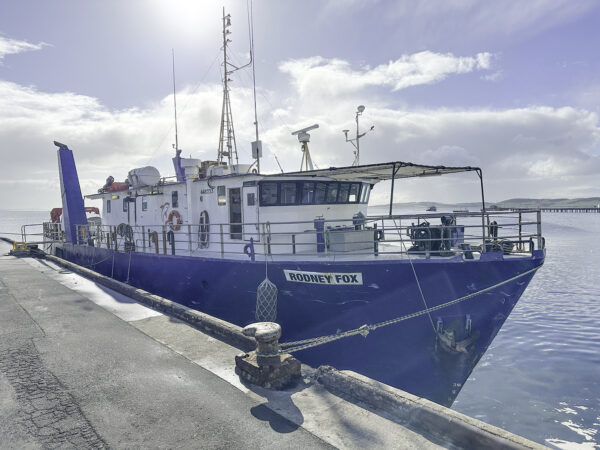
My home for the first week with the great white sharks

I just returned from a three week shooting trip through South Australia, and unfortunately… this might’ve been the most photographically unproductive expedition of my life.  🙁   But you know the saying – “when life gives you lemons… eat them with Vegemite!”

Three weeks, divided into three subjects:

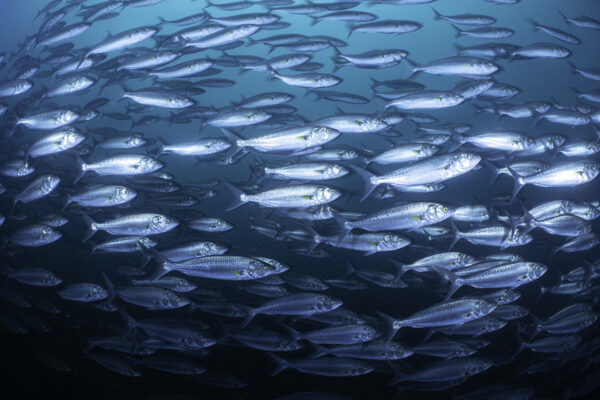
First, I joined Rodney Fox expeditions on their liveaboard boat for the great white sharks (Carcharodon carcharias).  But day after day after day of chumming hundreds of pounds of fish guts into the water, freezing my butt off in the deep cage and the surface cage, and not a single shark to be seen.  The deep cage is dropped down to ~1m above the seaweed-covered seafloor, at a depth that averages 55-75′ deep, then brought back up after 25 minutes.  The first dip down is understanably unnerving, not because we’re chumming for the ocean’s top apex predator, but because of the way it drops into the rough cold sea, and almost immediately immerses you at a pace you weren’t prepared for into cold water.  But we were warned that the main difference between a cage dive and regular dive, is that the diver is no longer in control – now the crew is 100% in control.  Not my favorite thing to hear, but it all worked out from a safety perspective.  I also spent quite a bit of time in the surface cage (using surface-supplied air from a regulator attached to the boat), but learned pretty quickly that with no sharks, it’s just getting cold, bouncing around in a cage for nothing.  Also, it’s a huge risk to my camera!  Bouncing around in a metal cage, leaning out a bit trying to hold my camera outside just to photograph the passing jacks and kingfish, I tapped my port (lens) against the baras more than once – no damage to my glass, but Suzanne did manage to put a nice permanent 3mm gash across her pricey WACP-C port.  Eek!
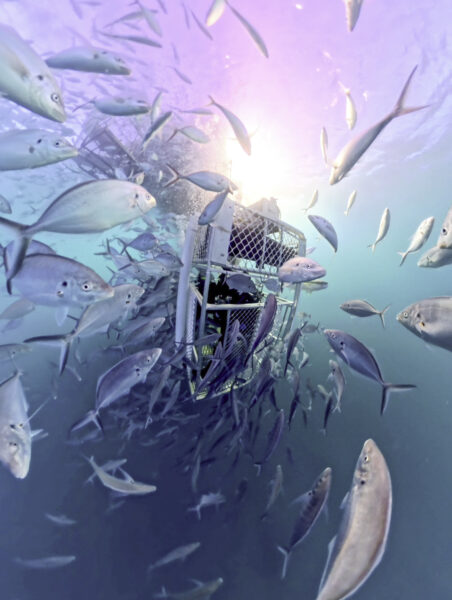
The view from outside the deep cage
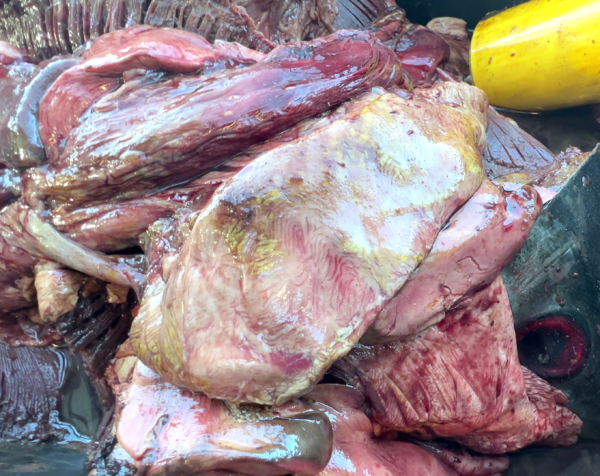
Chum to attract the great white sharks
Why no sharks?  It’s complicated, but most experts believe it’s all related to the tuna fishing industry doing their slaughtering of the captive fish in the growout pens at this time of year.  The way most tuna harvesting works nowadays (since we humans have depleted most tuna populations below sustainable levels) is that a huge percentage of tuna is caught as juveniles.  They’re then placed in oceanic grow-out pens where they’re stuffed with fatty foods, along with hormones and antibiotics.  When they’re market size, they’re then slaughterd in the pens, or by processing ships that pull up to the pens.  That smell is just irresistible to the sharks, who now abandon their historical hunting grounds to hang around the growout slaughtering pens.  And of course, the all-powerful fishing industry has lobbied the Australian government into keeping all other boats out of their region, which is why I was told we can’t just go to where the sharks are.  The timing of the slaughter is slightly different each year, and unfortunately, it was precicely when we were thying to film them.

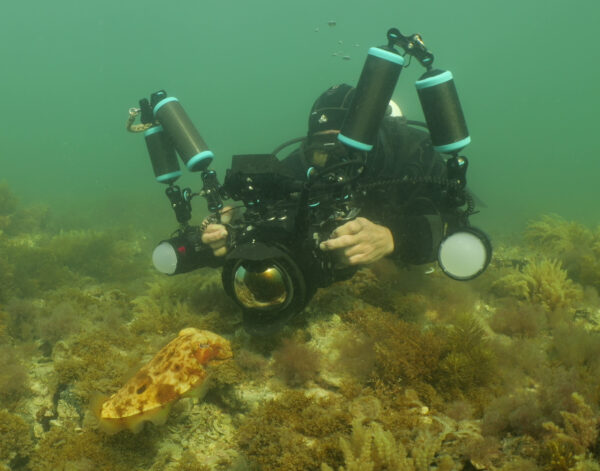
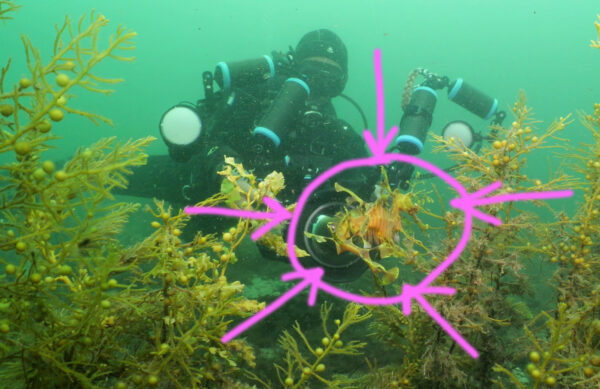
The second week was supposed to be devoted to the Giant Australian Cuttlefish (Sepia apama) annual mating aggregation, where they come in to shore by the thousands to mate and lay eggs at this time of year.  But we arrived, talked to the local experts, and guess what – only a tiny handful of them had been spotted.  We tried a few chilly dives in the most likely spots, but never saw more than five on a single dive, and definitely no mating behavior.  And yes, we timed it specifically for peak-of-the-bellcurve season.  Logistically, the dives are easy and hard.  Easy in the sense that it’s very shallow; around 10-20′ deep, and just 20-100′ from shore.  Hard because there’s only one place to rent tanks & weights for 100 miles (althought they’re great!), and there’s always a long, challenging walk down the rocks carrying all the heavy dive gear and cameras.  And it’s cold!!!!  Especially in my constantly-leaking drysuit!
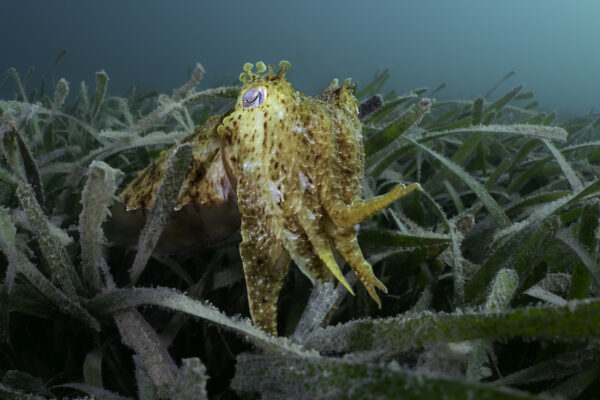
One lonely cuttlefish
Me shooting a lonely cuttlefish
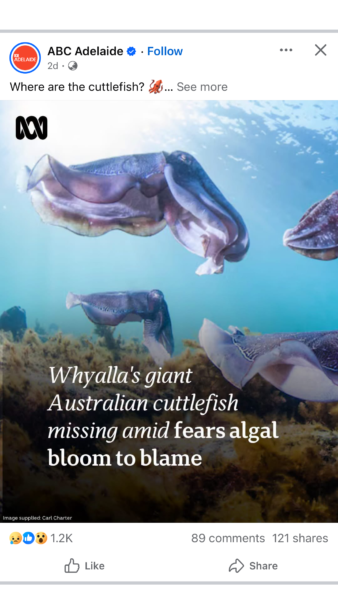
News clipping
So why are the cuttlefish not there?  good question!  The region has recently been experiencing an extremely harmful algal bloom, decimating wildlife throughout South Australia.   Also, we know that the mating aggregation will not begin until the water gets below 15°C / 59 F, and the water was unseasonably warm again this year hovering between 15.5-16.5 C.  Hmmmm… climate change deniers, how many times do you have to hear that story before you stop listening to politicians and start listenining to scientific evidence?  Nah, I’m not going to change your mind here if you’ve already got the blinders on….  Anyway, since their lifespan is less than two years, this entire spawning season not happening is likely to cause a catastrophic population crash that might take well over a decade to recover.  Then just a few days after we finished our time trying for the cuttlefish, local operators for the glass-bottom boats and the dive guides started canceling all remaining reservations for the season.
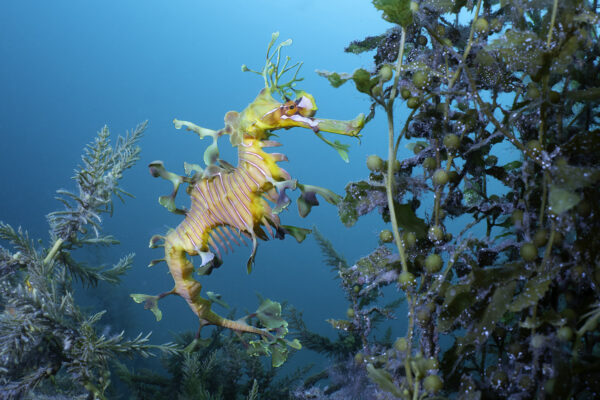
Since we were getting skunked on cuttlefish, one of the top cuttlefish experts gave us a secret tip that if we just drove three hours up the road, there was an unusual spot where a pair of leafy sea dragons had been seen, and on a cold, rainy, dark morning, we did actually locate this pair in some dark and murky water – that one experience that day probably saved the whole trip from being a total washout.  Honestly, I almost shed a tear upon finding my first leafy about 20 minutes in – truly a childhood dream come true!  And then Suzanne found a 2nd!  Even with the rainy conditions and being nearly hypothermic from my leaky drysuit, I opted to do a second dive with them, since you just never know if this is going to be my only chance.  And I’m really glad I did, since indeed, it was the only leafy sightings of the trip!  We presume they might be a mated pair, since even though we spotted them 20′ apart, on my second dive, they were together for nearly the entire 75 minutes, just never close enough to nail a *good* shot of them both in one frame.
At least I got a few leafy seadragon shots!
Me with a leafy – they have awesome camouflage!
Well, if its too rough to dive… Cheers!!!

The third week was to be devoted to shooting the Leafy Seadragon (Phycodurus eques).  Several more hours down the road, we arived at the best location for finding them. But again, the constant cold wind and rain made conditions pretty gnarly.  We opted to give it a shot anyway, and through great effort, found… absolutely nothing.  But was it because of our lack of experience with leafy seadragons, the very low visibility from all the rain runoff, or was there even worse news – that they weren’t there?  Bad weather stopped us from trying again for several more days, so we took advantage of being near  some awesome awesome Australian wine vineyards.

Days later, we drove back over to the best spot to check on conditions and met a local guide who was just gearing up with a customer to go find the leafy seadragons, and, not having had many customers for the winter season, he excitedly said that he would take us tomorrow.  After the dive, he called and said it’s the worst conditions he’s ever seen there in his entire life, visibility was less than a meter (he said he couldn’t see his fingertips with his arms outstretched) and he couldn’t find even one single seadragon, so he suggested we forget about it.  But then, just after, the world‘s top sea dragon expert and probably the most experienced sea dragon guide on the planet, said he would take us out the next day, so even with the lousy conditions, we excitedly jumped at the chance.  We tried, and not even he could find a single one, and if he can’t find one, then they are simply not there.
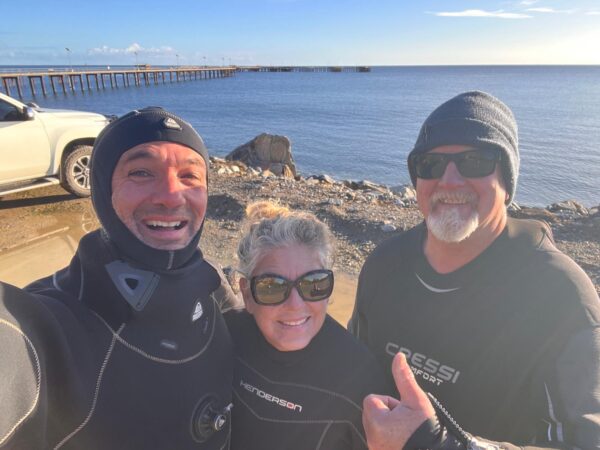
We tried… we failed…
Now you’re asking why… Well, so are we. No one has any good theories as to why there are no Leafy Seadragon’s in the best spots right now.  Did they move down the reef?  Did they get wiped out by something?  Did they get poached for aquariums?  We simply don’t know, but I’ll keep in touch with my contactas there, and might pop down to Oz again when I get word that they’re back.

Anyway… I love Oz, and this was my 6th or 7th time there.  I love the Australian people and their mullets and fun sayings and constant use of the c-word.  I love the landscapes, the cockatoos, the kangaroos, and even while the diving mostly sucked, and mother nature delivered me a major kick in the balls, it’s hard to not have a good time in South Australia – it’s a pretty magical place and I’m sure I’ll be back to try for some of these critters again if/when the local experts tell me things have returned to normal.  Its a big ocean, and there’s no fences.  Sometimes I nail “the shot” in the first hour of the first day, and other times, I spend lots of time & money to be cold and wet for nothing.  But Suzanne & I still had a great time, and maybe…. just maybe, we’ll see a leafy seadragon portrait from that rainy day in the Fish Faces print Collection in the near future….
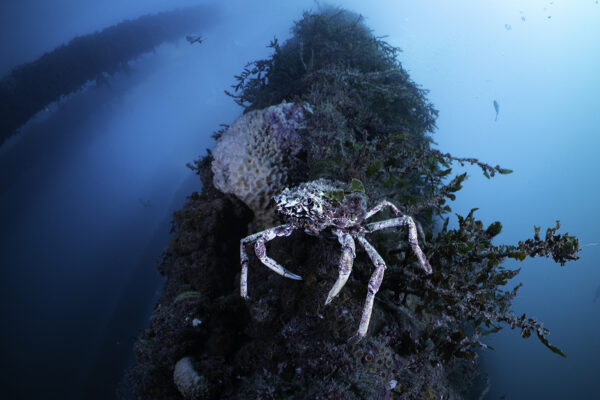
Spider crab crawling up the pier
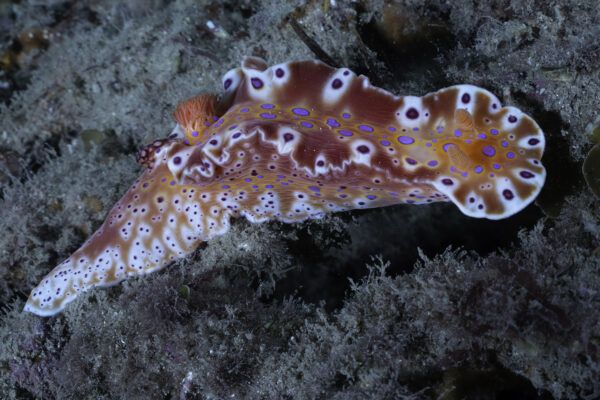
Big, bold nudibranch under the pier
School of Australian salmon under the pier
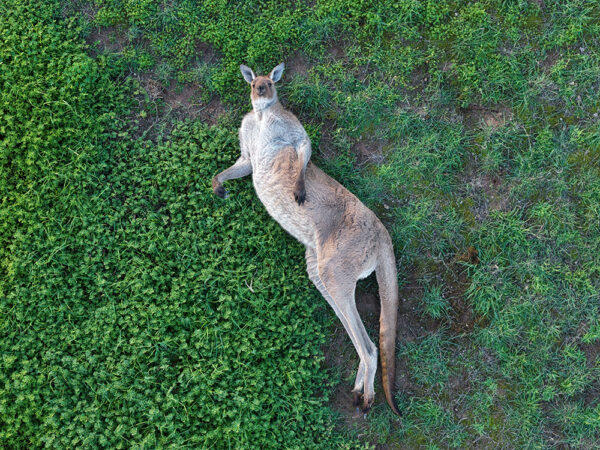
I aspire to be as chill as this kangaroo
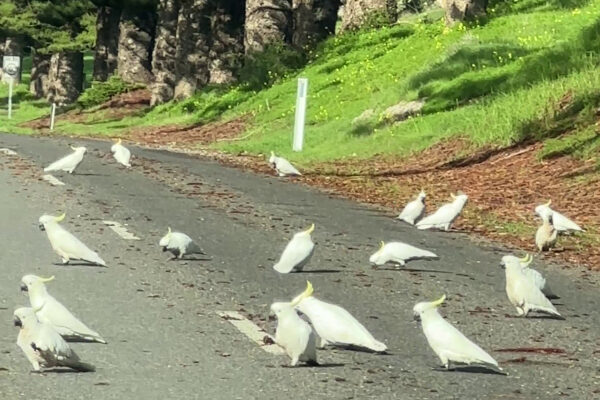
I brake for cockatoos!!!
Best license plate EVER!

Recent News

Up All Night, Sleep All Day in Okinawa

Making a life-changing transition to the live in the other side of the world is logistically intense, so it would be insane to make a 2.5-week pitstop en-route, right? Well, some opportunities are simply too good to pass up, so…. screw it! Let’s go! A few fellow fish-nerd friends and

Read More »

Fiji – Soft Coral Capital of the World

The island nation of Fiji earned it’s nickname among scuba divers decades ago by boasting one thing in greater abundance than practically anywhere else on Earth.  The aptly-named, “Soft Coral Capital of the World” now attracts tens of thousands of divers per year, so how was I to create shots

Read More »

Norway – Sea Pandas and Glowing Skies

When you think of the destinations that an underwater photographer dreams of, Norway doesn’t generally make the list.  But there are simply some things a guy can’t find in the tropics.  And in the past few years, I’ve had good reason for moving large apex predators, such as orcas, up

Read More »