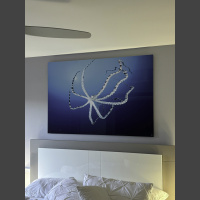
Description
LOCATION: Lembeh, Indonesia
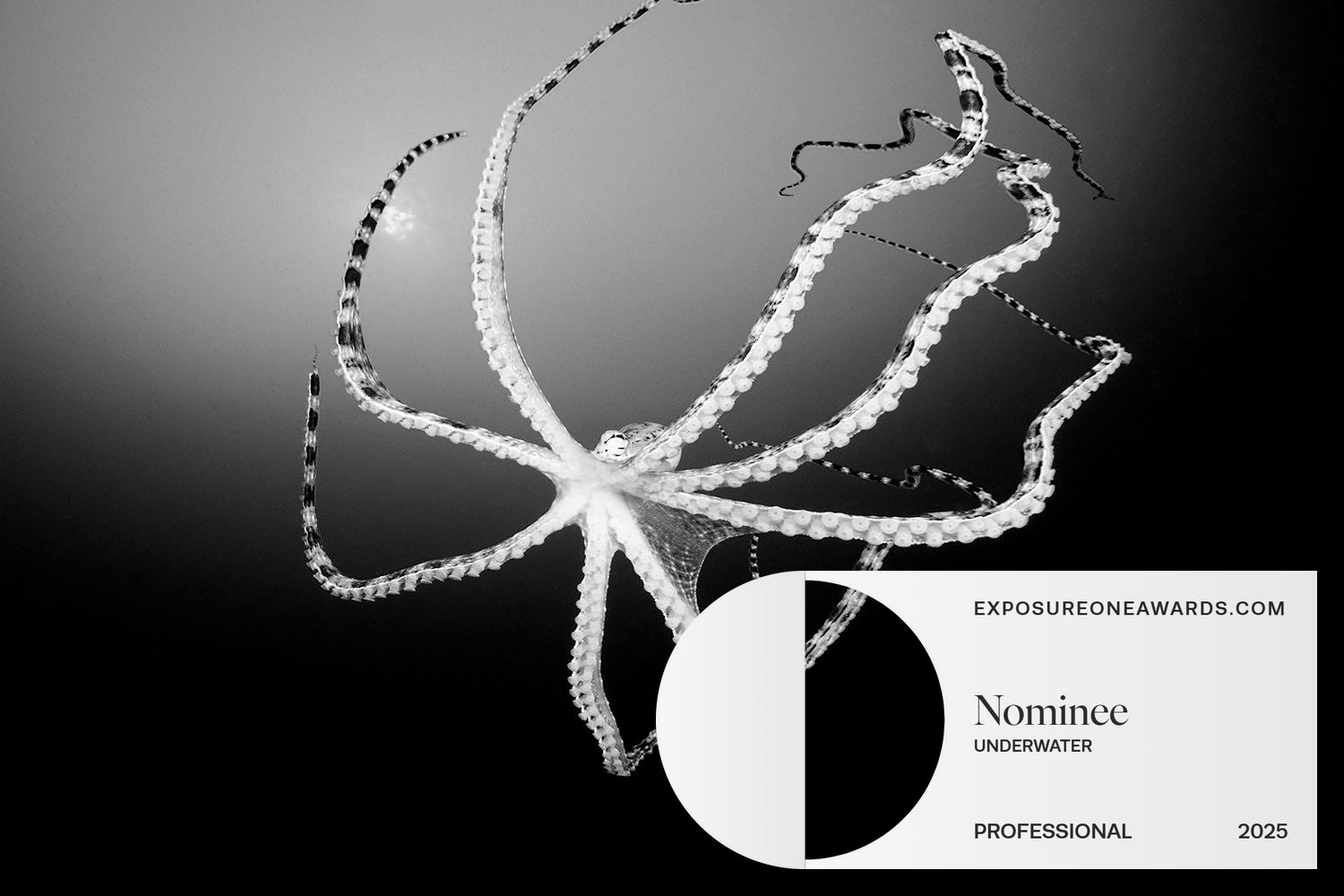
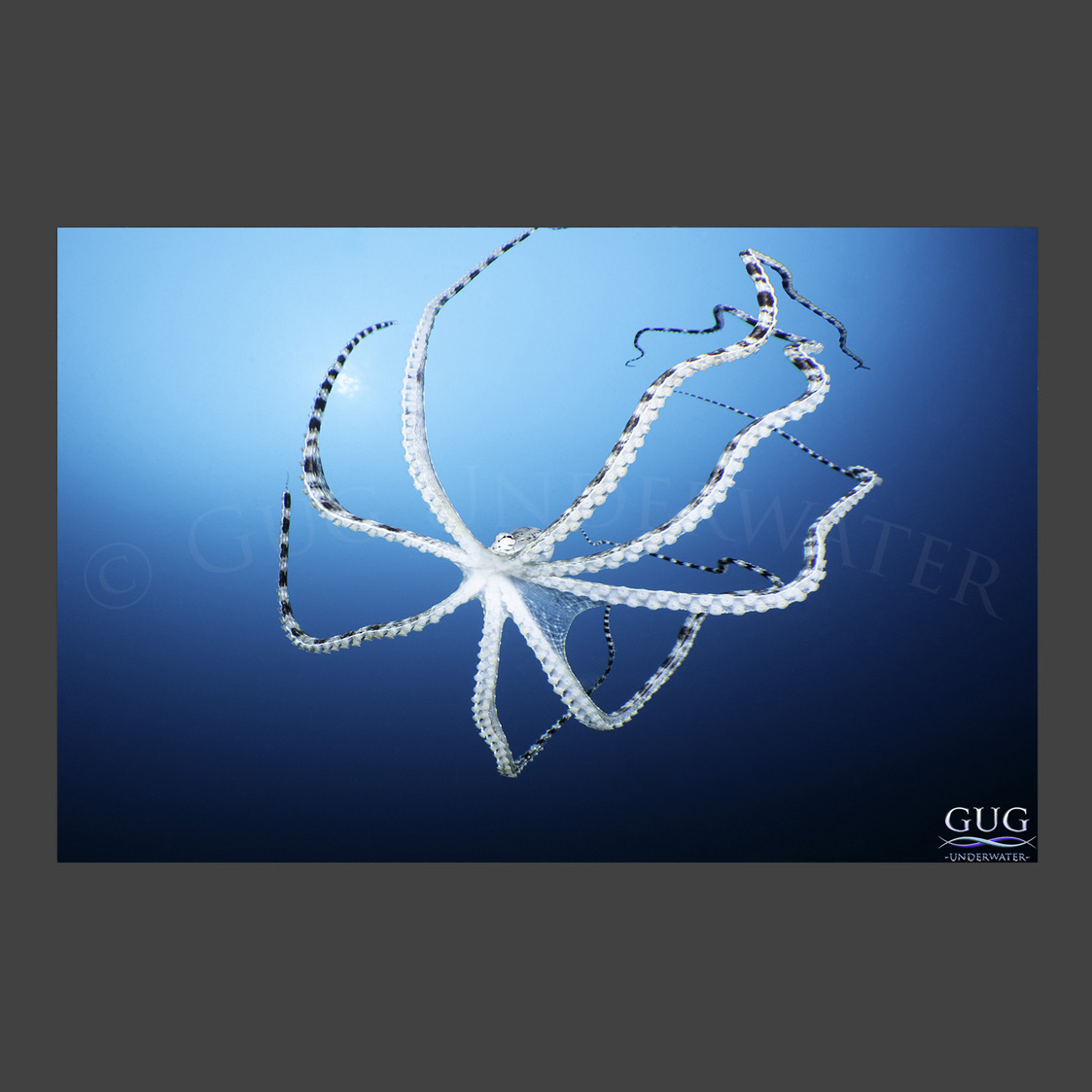
STORY: Just off a quiet Indonesian reef, where the water turns a soft green-blue and the sand below sparkles like powdered fool’s gold, I spotted a normally-skittish mimic octopus. 9 out of 10 times, they want nothing to do with a human, and quickly dart into a hole in the sandy bottom, but this one was happy to continue foraging, allowing me to shoot it for several minutes. Then suddenly, and without warning, it launched itself from the seabed with the dramatic flair of someone who absolutely knows they’re being watched. One gentle pulse of its arms, and it drifted upward in the water column like a tiny, eight-limbed hot-air balloon, politely pausing at the peak, as if to check whether I had time to lock my focus.
As it hovered, its skin flickered through patterns like a malfunctioning billboard – first zebra stripes, then sandy beige, then something that looked suspiciously like it had borrowed the outfit of a local lionfish. Mimic octopuses (Thaumoctopus mimicus) are famous for this kind of improvisational costume play. Depending on their mood, level of perceived danger, or feeding opportunities, they can imitate flatfish, sea snakes, or even jellyfish, when the need arises. Countless researchers & divers have made claims as to why they do this, but the science is wrought with anthropomorphication, where we tend to assign human rationalization to a non-human creature. We can’t help but to do that, but I’ve been a skeptic on many (often grossly over-simplified) claims of why they do what they do. Hours upon of hours of behavioral study alongside many hundreds of photos has led me to the conclusion that these mimicry behaviors are far too complicated for a simple sound-bite or catchy 30-second video on social media.
Moments after the shot, the octopus made a final twirl – pure showmanship – before gliding back toward the sandy bottom. With a soft plop, it settled into the seafloor, instantly reshaping itself into an innocent, nothing-to-see-here blob of sand-matching camouflage. If octopuses could wink, this one definitely would have. This is a nearly identical species as the larval wonderpus featured in the Aliens Collection’s, Alien #18. Here’s another view of the same mimic octopus from that day.
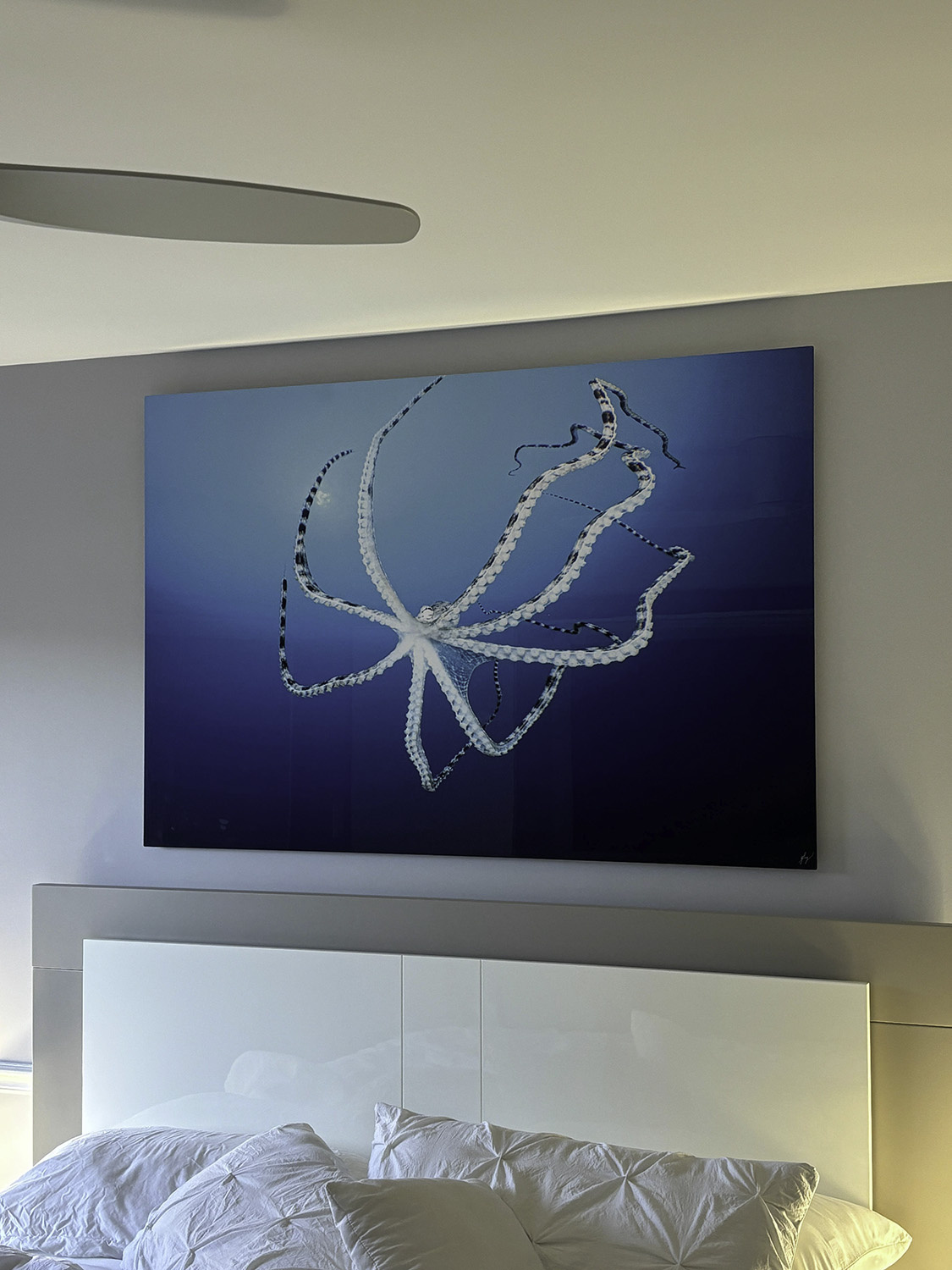
Shall We Dance is now available in the Fish Faces Collection of fine art prints, starting at 16×24″, and customizable up to 72″ wide. Originally shot as a horizontal image, it also looks nice as a square. Standard sizes are available to purchase online, but reach out via email/phone or stop by in person for a customization using our Virtual Installation where we help you visualize it in your space.
AWARDS: ExposureOne Black & White Nature Photography Awards in the Professional Category